
Car amplifier repair — by post,
with warranty
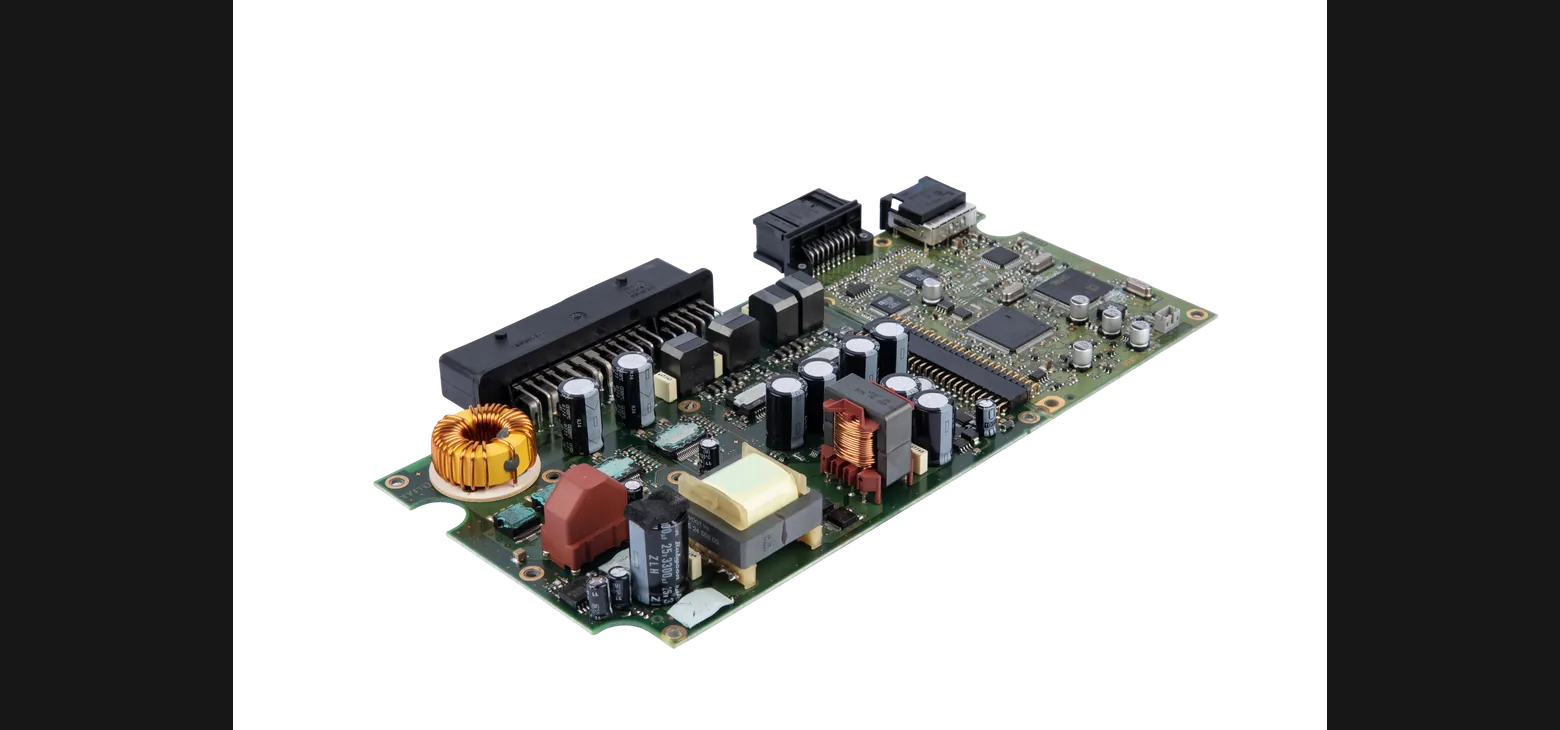
No sound, crackling, no bass — in most cases this is a fault in the OEM amplifier that can be repaired without replacing the whole module. We refurbish factory amplifiers from Bose, Harman Kardon, Logic7, Bang & Olufsen and Burmester. By post from all over Poland.


12–24 month warranty, depending on the service
Quote range within 24 working hours
Courier shipping from anywhere in Poland
Selected factory audio systems we work on








Quick repair quote
Are you experiencing one of these faults? Contact us now.
An OEM amplifier rarely fails suddenly and completely. More often it gives warning signs gradually — before it stops working altogether. If you recognise any of the symptoms below, you have probably come to the right place.

Complete loss of sound from the speakers

This may be a faulty amplifier output stage
Crackling and noise when adjusting the volume
This could be down to faulty power transistors or capacitors
No bass despite working speakers
This may be a non-working subwoofer channel
Loud popping when switching on or off
This may be a problem with the power section or mute circuit
Sound only from some of the speakers
Selected amplifier channels are faulty
Battery drain while parked
The amplifier does not go into sleep mode
Fault after flooding or a voltage spike
Damage to the power section or tracks on the main board

What
OEM amplifier refurbishment involves
Repair, buy a new amplifier, or a used one?
A new amplifier from an authorised dealer? Huge costs. A used one? There is no certainty that it will actually be working or that it will not fail again shortly. By choosing repair at OEMatic you get a warranty and peace of mind.
Slide the table sideways to see all columns.
| Parameter | New from the dealer | Used, from the open market | Repair at OEMatic |
|---|---|---|---|
| Approximate cost | 5,000–20,000 zł | 500–5000 zł | 1200–2460 zł |
| Working-order warranty | yes | no | yes (12–24 months, depending on the service) |
| Additional coding | required | often required | not needed |
| Reliability of operation | 100% | unknown | 100% – unit tested after repair |


Which amplifiers we repair
We work with selected factory audio, multimedia and navigation units. We always confirm the scope of repair after identifying the part number and version of the unit.
Bose

Harman Kardon

Logic7 / Harman Becker

Bang & Olufsen
Burmester

Mark Levinson

The scope of service depends on the device version, part number and symptoms. Please send a photo of the label so we can confirm whether diagnostics are possible.
How does mail-in repair work
step by step?
You do not need to bring the vehicle in. Describe the problem and we will help you work out what to remove and send. After inspection, you will receive a quote for approval — only then will we start work.
01
Describe the problem and show the device
Write what is happening in the vehicle, state the make, model and year. Add a photo of the device, the error screen or the nameplate sticker, if you have one. On that basis, we will initially assess whether we can help.
02
We will help you work out what to send
Not sure whether to remove the radio, screen, amplifier or another unit? We will advise which component to check, how to prepare it for shipping and how to pack the parcel safely.
03
We confirm the fault and quote for the work
In the workshop we carry out diagnostics, confirm the source of the problem and define the scope of work. We send a quote for approval. We only start work after your approval.
04
We repair, test and return
We remove the cause of the fault, test the device and send it back safely packed for refitting. Every repair we carry out is covered by a warranty.


on Google 5.0/5 — 370 reviews

Rating 5 out of 5. GOOGLE REVIEW
Many thanks to the entire OEMatic team for repairing the radio in my Lexus CT.
Professional and reliable service. I can wholeheartedly recommend this workshop!
Problem: black screen, no working radio, no interaction with the radio at all.
 Jan Bał
Rating 5 out of 5. GOOGLE REVIEW
Highly recommended! My OEM JBL amplifier from a Toyota (CHR, 2017) suffered a short circuit, and other audio workshops would not agree to repair it. Here the problem was solved extremely quickly. They received the parcel on Monday, and by Thursday the repaired unit was back with me. Excellent communication at every stage, and most importantly – the price includes a 24-month warranty.
Complete professionalism!
 Mateusz Janiczek
Rating 5 out of 5. GOOGLE REVIEW
A service absolutely worth recommending. After years of problems with the infotainment head unit in my Skoda Superb constantly freezing and resetting, the MIB was finally repaired. The main dealer could only offer a replacement with a new unit for 3500 eur (!), other car audio companies could not help, and OEMatic carried out the repair in 1 day.
 Piotr Nofski
Rating 5 out of 5. GOOGLE REVIEW
I recommend them wholeheartedly….I don’t know how they did it, but they decoded the radio from an Iveco Daily 2020 faster than it takes to pack the parcel with the radio…One workshop promised a lot, but failed and said the radio was only fit for scrap. I highly recommend them — complete professionalism and a good price. Best regards.
 autoodnowa u.
Rating 5 out of 5. GOOGLE REVIEW
I can definitely recommend them. Mr Tomasz repaired my BOSE amplifiers, RNS, NTG navigation units and more. Always 100% successful, fantastic customer approach and a convenient online platform for placing repair orders.
 Piotr Brzezina
Rating 5 out of 5. GOOGLE REVIEW
I recommend OEMatic — only 3 days passed from sending the radio to the workshop and having it fitted back in my car.
The radio from a Mercedes ML W164 2007 NTG2 BE 6089 had its fault diagnosed extremely quickly, and the repair was carried out just as fast.
Communication with Mr Tomasz was excellent, and updates from the workshop on the progress of the repair were sent promptly. This is definitely a workshop other people can learn from.
An obvious 5 stars from me.
 Adrian
Rating 5 out of 5. GOOGLE REVIEW
I had a problem with my Audi A3 8V, with no sound from the factory multimedia player. The guys solved the problem in a few days. I recommend them!
 Rafał Niżnik
Rating 5 out of 5. GOOGLE REVIEW
Service and expertise 100%. Thank you for helping with my RNS 315 radio. Highly recommended!
 Michał Tuz
Rating 5 out of 5. GOOGLE REVIEW
VW Touran radio, I sent it to the company because the reversing camera was not working and the radio would not turn on. Sent by courier. Diagnosis: no faults. (the fault needs to be looked for elsewhere) The radio was sent back quickly and the company did not charge anything, not even for the return postage. There probably aren’t many honest companies like this left here in Poland. Many thanks.
 John Doe
Rating 5 out of 5. GOOGLE REVIEW
Definitely recommended. Very fast repair and very good, speedy communication. Information was available at every stage of the repair request process — an online repair management system. The unit (radio) was already meant to be written off and replaced with another used one. Fortunately, I accidentally found the OEMatic blog while looking for a replacement, and it saved me from replacing it with another used unit, which would have been a loss for the appearance (the fronts of the replacements I found were not in such good condition, and all of them were older than my unit from pre-facelift models); the newer ones were more expensive than the repair. So that’s a plus too.
 Artur Kozubski
Rating 5 out of 5. GOOGLE REVIEW
RNS 315 radio with faulty Bluetooth. The radio sounds better than new. Others gave up on the repair, OEMatic handled it efficiently and quickly without any problems. We need more professionals like this. Thank you for the repair.
 Krzysztof Szaboń
Rating 5 out of 5. GOOGLE REVIEW
Professionally carried out repair of a factory VW radio, excellent communication, complete professionalism. May there be more companies like this in Poland.
 Sławomir Pobłocki
Rating 5 out of 5. GOOGLE REVIEW
I left a Honda Jazz radio panel for repair. In addition to the radio, the guys also repaired the CD player at the same price, even though I hadn’t asked them to. I also received spare bulbs for the button backlighting. Very friendly and professional, the radio and player work flawlessly. I recommend them with a clear conscience. Such expertise is rare nowadays.
 b nowicki
Rating 5 out of 5. GOOGLE REVIEW
Highly recommended. ZENEC radio after the pin was blocked. Code removed. Radio works, old pin. Fast, 1 day. Telephone contact without any problem. Parcel safely packed.
 Stefan Nowak
Rating 5 out of 5. GOOGLE REVIEW
For a long time I’d been battling an annoying problem in my VW Passat B8 — the car radio kept losing sound. Fortunately, I found OEMatic Car Media Lab and it was a perfect choice!
From the first contact it was clear there was professionalism and huge knowledge of factory audio systems. Quick diagnosis and an even quicker (and most importantly: EFFECTIVE!) repair! The result? The radio plays crystal clear, with no dropouts or interruptions. You can tell the fault was removed at the source, not just temporarily masked.
If you have any problems with factory audio, navigation or the radio in your car (especially VW, Audi, Skoda!), I definitely recommend OEMatic Car Media Lab. True experts!
 Łukasz Puziak
Rating 5 out of 5. GOOGLE REVIEW
The Harman-Kardon amplifier in my BMW F33 was flooded, so I decided to hand it over to OEMatic. A quick check to see whether it could be saved — yes! it could! A few days later the amplifier was back with me after repair.
For a moment I also had doubts whether only the amplifier had been damaged by the flooding, because I lost the ability to set the time and information such as instant fuel consumption or average fuel consumption disappeared; after a phone call I was told that this can happen because of a break in the car’s CAN circuit due to the amplifier being absent.
The theory proved correct, and fitting the already repaired amplifier helped and all the functions returned.
I hope the amplifier will serve for a long time to come and without faults.
I honestly RECOMMEND IT!
 Michal Marecik
Rating 5 out of 5. GOOGLE REVIEW
A great company, they will help you in any situation when it comes to navigation.
Two companies from the Małopolskie region where I live suggested replacing the unit; at the authorised service centre the fault repair would cost 1400 ,- and they helped me fix it, and over the phone 😃
 Miroslaw Syty
Rating 5 out of 5. GOOGLE REVIEW
The content of the reviews I read quickly convinced me to have my unit repaired at OeMatic. I expected the highest quality of service at every stage and that is exactly what I received. After the phone call I received all the information needed for shipping by text message. As soon as the workshop received the parcel with the radio, I got a phone call, we agreed the details, I confirmed the price and the repair began. In the afternoon of the next day I was informed that the repair had been completed, I settled the bill and the radio was back with me after 4 days. It seems there is no room for even the slightest shortcoming in this company (such as a delay with a text message).
For me, this is the highest quality.
Thank you very much for the repair and I wish you success🙂
Dawid
 Ania Łyszkowska
Rating 5 out of 5. GOOGLE REVIEW
Professional and reliable service. The fault was initially diagnosed remotely, and the repair cost estimated. The unit was delivered to the workshop and collected remotely by courier. Everything was fast, straightforward and efficient. The car audio came back to life 🙂
I can recommend them with a clear conscience.
 Bartłomiej Machnik
Rating 5 out of 5. GOOGLE REVIEW
Five stars is not enough..
OEMatic solved the problem with a non-working USB port (motherboard repair) in the factory navigation system from a Kia Sportage in express mode. Highly recommended.
 KJ
We rescue even the most difficult cases.
See our latest case studies

Mercedes Logic7 amplifier repair – no sound
No sound in a Mercedes W221 or W216? The Logic7 amplifier may be to blame. See why it fails, how professional refurbishment is carried out, and why it is worth repairing rather than buying a used unit.

BMW amplifier repair – Harman Kardon, Top Hi‑Fi, Logic7 – no sound after water ingress
Water in the boot and a blown 40A fuse are a common cause of silence in the radio. Find out when repair makes sense — free diagnostics and a quote within 24h.

No sound from the Kia/Hyundai AMP-80SLE / AMP-80RPE amplifier? We know the solution!
No sound, a loud bang or random crackling in the speakers? If your car uses an AMP-80 series amplifier, whether it is AMP-80SLE (e.g. 963703W300, 963703U700,…

Repair of Mitsubishi 8701A474 amplifier – no sound
Having trouble with no sound or a flat battery in your Mitsubishi (Outlander, ASX)? Most likely the culprit is a water-damaged Rockford Fosgate 8701A474 amplifier. We offer professional refurbishment with a 24-month warranty.
Car audio amplifier repair makes sense when you want to keep the original module and check whether it is really causing the sound problem. In practice, no audio, crackling or a flat battery do not always mean the power stage itself has failed. That is why the key thing is to confirm whether the problem concerns the amplifier itself: diagnostics of the removed module make it possible to confirm or rule out its fault, and if it works correctly on the bench, the car installation, wiring loom or main unit must be checked locally.
What are the symptoms of a faulty audio amplifier?
A faulty amplifier may be indicated not only by complete silence, but also by loss of one channel, no bass or crackling. If the sound comes and goes when warm, the power supply section, mute circuit or components drifting out of specification are also suspected. Such symptoms are best assessed together with the behaviour of the radio and the whole audio system, because sometimes the culprit is also a missing input signal.
It also matters whether the problem affects all speakers, selected channels, or only appears after the car is locked. This helps determine what information is worth including with the module when sending it in. In the description, please include:
- whether the symptom appears immediately after start-up, after the module warms up, or randomly,
- whether the problem affects all speakers, selected channels or the subwoofer,
- whether the fault appears after the car is locked or is related to current draw while parked,
- whether the radio or navigation system starts up correctly despite the audio problem,
- whether there has previously been flooding, overvoltage, battery replacement or work on the wiring,
- the part number and photos of the label, connectors and any signs of corrosion or moisture.
Car audio amplifier repair process
The repair process starts with confirming whether the amplifier itself is faulty or whether it is a related component. That is why, before sending it, we need a short description of the symptom, a photo of the label and information about what happened before the problem appeared. Based on this, we prepare a free initial indicative quote; the time needed depends on the completeness of the information and the type of module, and it often takes up to 24 working hours.
Once we receive the module, we carry out diagnostics on the test bench, checking its operation, reaction on start-up and the symptoms reported by the customer. This stage makes it possible to confirm or rule out a fault in the amplifier itself; if the module works correctly on the bench, the car installation, wiring loom or main unit must be checked locally.
After confirming the fault, we provide the final price and scope of work for approval. The repair itself covers removing the cause of the fault in the module, followed by checking its operation after the work has been completed. If the description or traces on the module suggest flooding, overvoltage or a problem on the installation side, before refitting it is worth having the car checked by a local specialist, i.e. someone who will assess the condition of the wiring in order to reduce the risk of the fault returning. After the repair, the amplifier undergoes a final test and comes back with a written warranty, within a scope depending on the repair.
How should you prepare an amplifier for repair shipping?
For shipping, it is best to prepare all the information needed to distinguish an amplifier fault from a car-related problem. The part number, description of the symptom and the moment when the fault appeared are important for diagnostics. A complete loss of sound is assessed differently from sound dropouts after warm-up or current draw after locking the car. We inspect the removed module, so the description should reflect the behaviour of the whole audio system.
If the radio or navigation system starts correctly but there is still no sound, that information helps narrow down the tests. Signs of water around the module, the condition of the connectors and whether the problem affects all speakers are equally important. Before sending it in, prepare:
- the car make, model and year,
- the part number from the amplifier label,
- a brief description of the symptom and when it occurs,
- information on whether the problem affects all speakers or only selected ones,
- a note on whether there has previously been flooding, overvoltage, battery replacement or work on the wiring,
- photos of the label, connectors and any signs of corrosion or moisture.
Why is it worth repairing the original OEM amplifier?
Repairing the original OEM amplifier makes sense when you want to keep compatibility with the car and avoid the risk of buying a module with the same fault. A used unit may only appear to work properly, and its condition and history depend on the module’s origin, operating conditions and any previous repairs. In factory audio systems, it is not just the power stage that matters, but also communication, standby control and behaviour after the car is switched off. If the fault is limited to the module itself and there is no need to replace other system components, repairing your own amplifier lets you keep the factory configuration without replacing the entire audio system.
It makes sense when the fault concerns typical electronic components and the rest of the module is still fit for further use. In practice, the repair covers not only the damaged circuit, but also verification of the module’s operation after the work has been carried out. This makes it possible to confirm whether the amplifier itself was the problem, or whether it was also affected by water ingress, a voltage spike or unstable power supply.
The cost-effectiveness of repair is assessed only after inspection, especially if the module shows signs of water ingress, corrosion or serious board damage. However, if the fault concerns the power supply section, mute, selected channels or components that age over time, repair may be a more predictable choice than buying a used module, because it concerns your own unit and is preceded by inspection. It also makes it possible to check whether the amplifier starts up correctly after repair, plays on all channels and does not drain the battery when parked.
Frequently asked questions
and answers
Key information about diagnostics, shipping, quoting and repair of an OEM factory unit.